I became acquainted with the thought provoking artwork of Maeve Berry several weeks ago through fellow blogger,
Charles Cowling, and it has taken me that long to figure out how I feel about it. Ultimately, I decided to share her work with my readers because it brings up some questions that are vitally important to the subjects of Death, Art and Memorialization - and because of its surprising beauty.

Ms. Berry's 'Incandescence' is, in her words, "a series of images capturing the last moments of the human body in the material world." The photos are taken through the aperture of a cremator, and present something that very few people have seen in their lifetimes. Having seen the cremation process myself, I was pleased and surprised by the beauty and reverence of Ms. Berry's photos. A great deal of the cremation process is not something that is easy to watch. The reduction of the body by heat and flames involves some very disturbing imagery, but this is not Ms. Berry's focus.

What she has documented is the end of the process where the last amounts of combustible material in the body feed the flame and disappear, leaving only bone behind. Here is a statement about her work from the Diemar Noble gallery:
"Taken within a cremator, the images aim to confront the taboos surrounding death imagery in modern society. 'Incandescence' presents death as an art form, allowing the viewer a dual perception: an initial visual perception on a purely aesthetic level, followed by a secondary mental perception informed by the title and closer inspection of the images. The main concept driving this project was to afford death portraits, of natural deaths, a place in the art gallery amongst all other images of life events. She fills the void that exists in the modern art gallery with regard to the representation of death. Death is inevitable but frequently avoided by image-makers. The ‘final’ photograph is no longer prevalent in family albums. Her photographs, in addition to being evidence of the human condition, are aesthetically pleasing allowing the viewer to linger and reflect without feeling uneasy. Maeve Berry explores this visual void, demystifying and stripping back all material trappings - bones laid bare to reveal beauty in the thing that we fear the most."
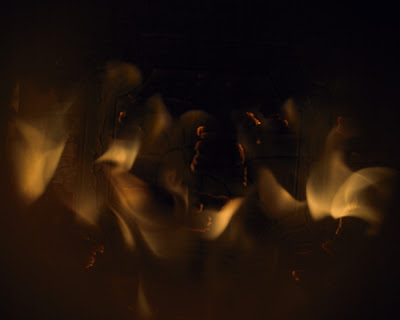
The 'Incandescence' series represents an important step in acknowledging the reality of our mortal situation. In our culture, death is most often either ignored, or portrayed in a callous, graphically violent Hollywood manner. What has been missing is art like Ms. Berry's, that provides an accessible and aesthetically inviting imagery of death. In presenting the reality of dissolution without the disturbing gore that would turn us away, we are left to face the real issue that has not been adequately addressed by so many of us. Berry's art draws us in to a deeper and more personal exploration of the significant role that the inevitable demise and dissolution of our physical bodies plays in our lives. Accepting our mortality, and pondering our own demise on a deeper level can help us to make the most of our limited time, and deal with our deaths and the deaths of those we love in a more compassionate and positive manner.

As an undertaker, I have some reservations about the privacy issues involved in this kind of work, and I hope that Ms. Berry has obtained the informed consent of the families of the deceased involved in this project. Certainly though, the identities of the deceased are not apparent in the photos. In fact, at this point in the cremation process, what I see in these photos is more an example of our universal condition, than an image of the individual.
I also have reservations about the idea of 'death as an art form'. Documenting death and basing art on it can be an art form, but I feel that referring to death itself as an art form conveys the idea of art being the purpose and most notable result of death. This ignores the wider implications and consequences of death for the individual and that person's family and community.

That said, I think that this series provides and important opportunity to explore the ideas of death in our art and culture, and I applaud Ms. Berry for her courage and vision.


