Showing posts with label embalming. Show all posts

Sunday, May 2, 2010

Motorcycles and Mamas: Together Forever, Part 2


This week, the web was abuzz with photos of a man embalmed on his motorcycle in Puerto Rico. Debate about the tastefulness, respect and even the legality of this type of embalming have been a subject of conversation among funeral service providers all over the world. Is it ethical to display a dead man frozen into a posture of riding a motorcycle? If so, what would be the limit to this type of display? Even if a family asks, and demonstrates that it was the wish of the deceased, should a funeral home agree to embalm a person holding a cigarette? a TV remote? a gun? an obscene gesture?
At a certain point, you're sure to upset some of the public and face serious questions about respect for the dead. It may be well and good for the family, if they believe it was truly appropriate, but a funeral home has a role to play in setting the appropriate level of respect paid to the deceased.

ritual death

In November, 2008, I posted a story about a similar situation. A family having lost a mother and a sister asked that they be buried together in the same casket. The mother had cared for her profoundly disabled daughter through adulthood when both died within a day or two of one another. The first funeral home they asked refused to do it. They assumed it was illegal, and thought it was inappropriate.
The family, however, knew what they wanted, and went to another funeral home. After researching, the directors found that it was indeed legal. Not only that, it was the right thing to do for the family. It was a great comfort to them to know that mother and daughter were together as they had been in life.

In September of 2009, a friend of mine, Skip Johnson passed away after a long battle with cancer. Skip's daughter gave me two photos to accompany the obituary, and asked me to pick one to use. Both were nice, but I knew right away that Skip would want me to use the one showing him sticking his tongue out. I knew that his many friends would also appreciate seeing Skip stick his tongue out at death on the obit page. One of the local papers refused to run the picture. They said it was sacrilegious and disrespectful. Another ran it without question. I knew I might take some heat for this- and I got a little, but I knew it was the right thing to do. In fact, in looking back at all the ways, small and large, that I have found to make services meaningful, I would put my choice of photo up there among the most important.

ritual death
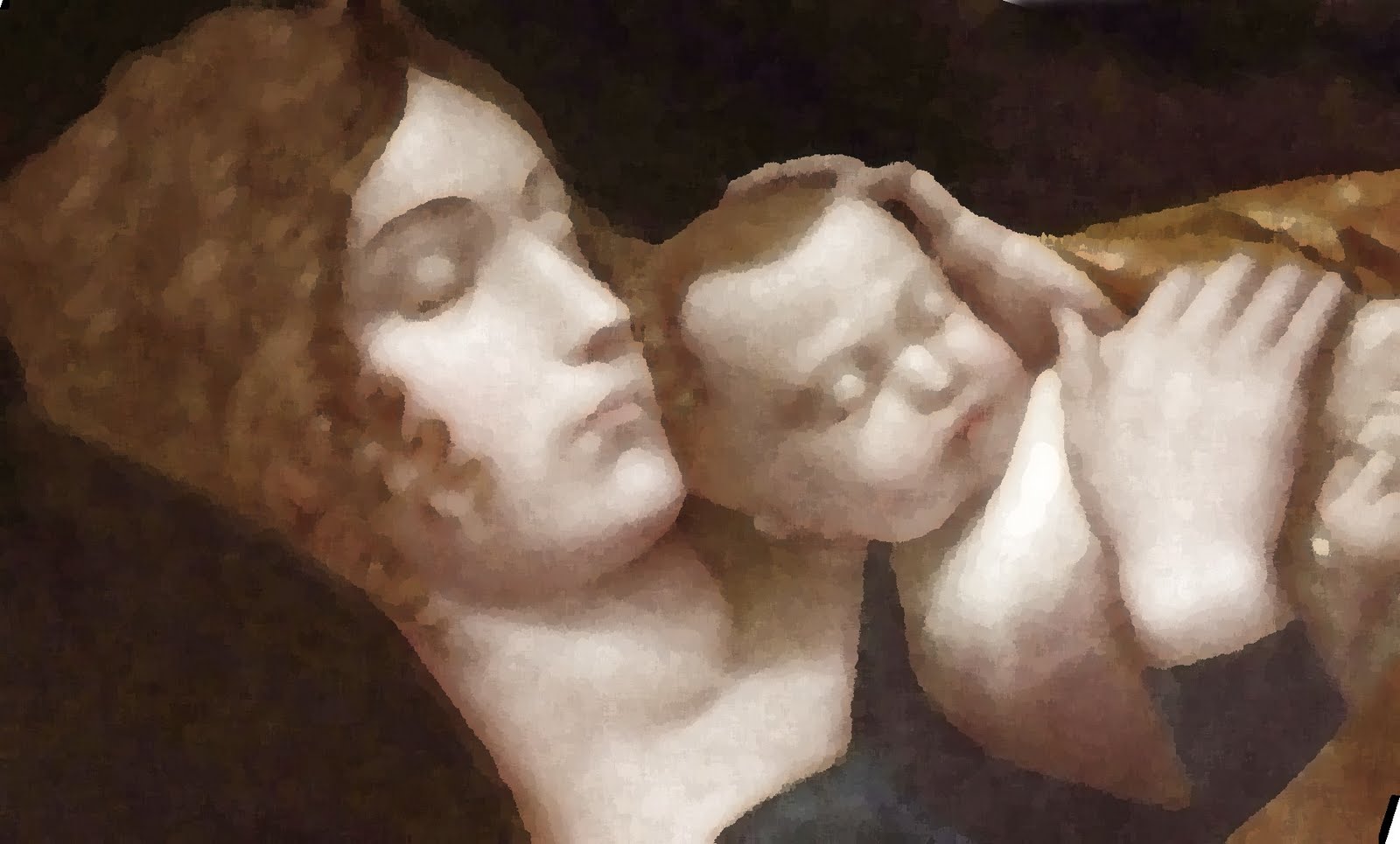
Last week, the directors I work with and I were faced with a heart breaking situation. A young mother and her baby son had died tragically. Like the first family, they wanted them to be together. It took a group of us to do the embalming work. Not because we needed that many hands all the time, but to support one another emotionally in this very difficult situation. No one should have to be alone to do this kind of emotionally taxing work. With a group of us working together, it was possible to keep every one's spirits up to concentrate on the work instead of falling into a cycle of sad and disturbing thoughts. I was able to keep my composure throughout the work, but at the end, when we placed the baby into his mother's arms, adjusted into a natural and loving embrace, I finally lost it.
The sadness and tragedy were palpable, but what became emotionally overwhelming, was the beauty and peace we saw with mother and child together. This image didn't fix anything. It didn't change the circumstances. Some might say that it was stagecraft, a falsehood, a gruesome manipulation of two dead bodies. But for the family, and for those of us who were involved, it was beautiful, and appropriate, and the right thing to do.

ritual death
So, what should we do or think about a man embalmed into a position riding his motorcycle? Is it tacky? Is it a publicity stunt? Is it a legal liability?
Should funeral directors refuse to perform manipulations like this? Well, I'm not a lawyer, I'm an Undertaker. I say follow your heart. If it's the right thing to do, you'll know it.

Saturday, April 18, 2009

Embalming: Part 3, Stagecraft

Ross Hollywood Chapel, Portland, Oregon

In the two previous installments of this series, I discussed the transformation that takes place in the appearance of the deceased with embalming, and the temporary preservation that embalming allows.  Now, in part 3, I'll discuss 'stagecraft'.  Although not part of the embalming procedure, these finishing touches are an essential and often misunderstood part of the preparations for viewing the deceased.
At the funeral parlor, careful steps are taken in presentation for a family's viewing of their departed.  Usually the day before services are held, it's time for 'hair, makeup and wardrobe', or as is listed in a funeral home's federally mandated General Price List, 'Other Preparation of the Deceased'.
When we look at a person, a whole host of factors make them recognizable to us, and when any of these pieces don't match our memory, the rest don't quite fit together right.  Hair is a big one for women, and often, even for men.  Whenever possible, the funeral director arranges for the hair dresser who worked on the person in life, to prepare their hair for the funeral.  If this is not possible, we rely on photos.  It is not unusual for family members to come in to prepare hair and makeup.  This can be a difficult thing to do, but I don't think anyone ever regrets having done it.


Busby Berkeley-Stagecraft

Makeup is one of the most misunderstood aspects of preparation, and heavy handed funeral directors and embalmers are largely to blame.  In some communities, people have come to expect a 'funeral pallor' of caked foundation, waxy orange lips and greasepaint in the Broadway tradition.   I think that the fear of bad makeup is often a factor in families choosing a service that does not include viewing.   
In most cases, when the embalming work has been done well, very little makeup is needed.  Good embalming practices include the use of pigments that replace some of the reddish tones that the circulating blood provides in living tissue.  A light layer of foundation and some highlights complete this effect while leaving the texture of the skin, and natural variations in skin color and freckles visible.  Certainly there are times when more opaque makeup must be used to conceal trauma and jaundice, but good makeup work should be as invisible as possible. 
Many women have told me that when they die, they would like us to use their favorite makeup brands and colors.   This sounds like a good idea, but we are not starting with the same skin tones in death that they start with in life, so adjustments need to be made.  The majority of our work is just bringing back the original appearance of the skin as it would have looked in life before any makeup was added. Because of this difference, the foundation we use often has more pink than they would use to achieve the same effect. Similarly, a light brush of foundation and touches of red on the lips, nose, ears and eyes will make a man look like he did in life with no makeup on. 

In addition to hair and makeup, wardrobe and scene construction are a part of presentation at the funeral home.  These preparations take a surprising amount of time and skill to achieve a comfortable and well turned out appearance.  Clothing that the family brings in may or may not have fit recently, but in either case, good preparation involves alterations that make those garments appear comfortable and well fitting.  I have been told that news anchors have their suit coats altered (sometimes only temporarily,) so that they appear to fit correctly in a sitting position.  Similar steps are taken with collars and lapels for people lying in state.  Sleeves and cuffs are carefully positioned prior to placing the deceased in the casket so that the folds stay neat and attractive. 
Arranging for a comfortable appearance in the casket is another task that takes more time and skill than most would guess.  More than just a box, the casket is the setting in which a person is viewed.   Padding, mattress levels, the drape of fabric and arm supports are adjusted until the deceased is shown to their best advantage.   The skills of the undertaker create the appearance of the deceased lying at rest and comfortable in a setting that is soft, dignified and exactly the right size.


If done well, all these aspects of stagecraft go unnoticed, and the viewer is allowed to focus on their loved one.  They are not distracted by unusual skin tones, unfamiliar hair styles, ill-fitting or uncomfortable looking clothes, a stiff, awkward posture, or a setting that looks unnatural.  They see what they have come to see- not makeup, casket or artifice, but the familiar face of the person they miss the most, and the arms and hands they recall hugging and hugging them back.  They see that person at rest and at peace, and if the undertaker did a good job, they might never guess how much work went in to making everything look so natural.   

Tuesday, March 3, 2009

Embalming: Part 2, Temporary Preservation

In addition to the dramatic changes that embalming can make upon the appearance of the deceased (Embalming Part 1), another result of embalming is temporary preservation.

In many cultures, funeral services take place immediately after death, and major world religions such as Islam and Judaism proscribe a narrow window of time within which burial must take place. In the United States today, many of our families are quite spread out, and we plan services to allow for newspaper notices to be printed, to fit our travel plans, or for the weekend when we’re off work. Embalming enables the delay in services and viewing.


Family and friends may need to travel long distances to attend funeral services

Embalming is a two stage process. First, embalming fluid is introduced to the body through the circulatory system, allowing for most tissues in the body to become temporarily preserved by binding the nitrogen atoms in the body’s proteins (muscles) together. This adds a firmness and a stability to the tissues.
The second step in embalming is the removal of waste material and digestive fluid from the body, followed by the introduction of embalming fluid into the hollow areas of the organs that do not get enough preservative fluid from the circulatory system. This fluid is, in turn, removed after it has a chance to act upon these tissues. Without the second step, rapid decomposition can occur, even with refrigeration.
Every year in the United States, families choose to have viewings without embalming because they see it as unnatural or bad for the environment. However, without embalming, the body can change rapidly, even with refrigeration. Think of how long a steak would remain fresh in your refrigerator – not very long. Now think about how long it would remain fresh if it hadn’t been separated from the waste and digestive enzymes present in the cow’s body- a very brief time indeed.


Time Flies


Formaldehyde is the active ingredient in embalming fluid. It is a cousin to alcohol, which preserves in a similar manner, but has the disadvantage of leaving the skin gray and coarse. Formaldehyde is a naturally occurring and unstable gas. It is released into the atmosphere when lightning strikes, and though cutting and sanding wood in a wood shop. It is naturally present in our atmosphere and is used in the production of many consumer goods. During embalming, the formaldehyde acts upon the proteins in the body, binding together the nitrogen atoms. After this chemical reaction, all that is left of the formaldehyde are the temporarily bound proteins and water.


Amino Acid plus formaldehyde yields fixed amino acid and water,
Source: Embalming: History Theory and Practice
Copyright 2000, McGraw-Hill


Many people picture jars of preserved frogs from biology class when they hear the word formaldehyde, and imagine that an embalmed body is like a jar of formaldehyde when buried. In fact, when burial takes place, the fluid has acted upon the tissues and the very little actual formaldehyde remains in the body.
Another misconception is that embalming preserves or mummifies the body for a very long time. When bodies are embalmed for funerals they receive much less formaldehyde than when they are prepared to be used as cadavers for medical students. Enough fluid is used to allow for the body to remain stable for a viewing within a week or so. If more fluid were used, the body would remain stable longer, but it would lose the pliable, life-like skin tone that recalls the appearance of the person in life. Embalming for funerals does not prevent the break down of tissues into their basic elements. This process is only delayed to allow for friends and family to say their goodbyes. Embalming for medical schools lasts longer, but is also temporary.
Formaldehyde gas can be dangerous if inhaled (or ingested, just like methyl alcohol), and this is an issue in the preparation room during embalming when the gas can be present in the air, but not a hazard for those who are near the body during viewing, of for the ground water in cemeteries because the formaldehyde bound within the fluid and formaldehyde gas released from it are no longer present.

Part 3, Stagecraft

Tuesday, February 24, 2009

Embalming: Part 1, the transformation

2/24/09


Two photo composites by Artist Nancy Burson in a project dealing with cultural conceptions of beauty and facial features

Embalming is a topic that nearly everyone has an opinion on, but few know much about. This post is a beginning point to understand the process and results of embalming. In future posts, I will explore more of the issues involved in embalming and the other tasks involved in preparing the deceased for a viewing.
As an apprentice, my first impression of embalming was the transformation it made upon the deceased. I noticed that when the dead arrived at the funeral home, they looked, of course like people, but not like specific people. They seemed to lack their distinguishing features. They were pale and their features were drawn back, mouths and eyes open, they were usually needing a shave and a hair cut. As the embalming preparations moved forward, the features gradually returned, and I began to see (or even recognize) what that person had actually looked like.

The glow of Health as pictured in vintage Japanese magazine covers via Gatochy

The first few steps often made the most dramatic changes. The eyes and mouth were closed and set into natural expressions, the person was bathed and shaved, hair washed and combed. Then the embalming fluid was introduced, flushing out discoloration and returning a firmness to slackened cheeks and lips. The pigment in the fluid began to bring back the glow that once shone from oxygenated blood flowing through capillaries below the surface of the skin.


Duotronic embalming machine
At this point, under the care of a skilled embalmer, the skin tone, expression and facial features of that person had returned to a very close approximation of the way they appeared in life, and I was amazed, because I could see the person. In addition to the vast improvement in sanitary issues, I could see the character and personality of a specific person who, only a few hours before, had looked like they could be anyone or no one. This made an impression upon me. The fact is that it is a much different experience to be around and to look at a person who has been embalmed, and one who has not been embalmed. I am confident that if people really knew the difference first hand, almost everyone without a religious or philisophical prohibition against embalming would choose it without a second thought. The difference is that vast.
In life, our cheeks, laugh lines and other features make us recognizable and express our unique character. Above, a picture of Portuguese personality and beauty via Gatochy


You could argue that Chet Baker looks like he's already dead in this photo from the documentary film of his life "Let's Get Lost", and in fact, he died shortly after this picture was taken, but I think that the photo shows the personality that lines and other facial features give to a person's appearance. These features are lost due to the effect of gravity on the facial features of a person who has died, and not been embalmed.
Today, people have many decisions to make during funeral arrangements, and whether to embalm or not is one of the big ones. Legally, a private family viewing can take place without embalming, and many people choose this route, or choose not to view at all. Whatever the choice, people should be aware of what they are getting, and in my professional opinion, they are getting a better look at the deceased if the funeral home staff is allowed to do their work prior to viewing.

Part 3, Stagecraft
Related Posts with Thumbnails

Contact Me

My photo
Funeral service faces a crisis of relevance, and I am passionate about keeping the best traditions of service alive while adapting to the changing needs of families. Feel free to contact me with questions, or to share your thoughts on funeral service, ritual, and memorialization. dailyundertaker@gmail.com

Followers